

Etsy sellers: what the new AI terms say
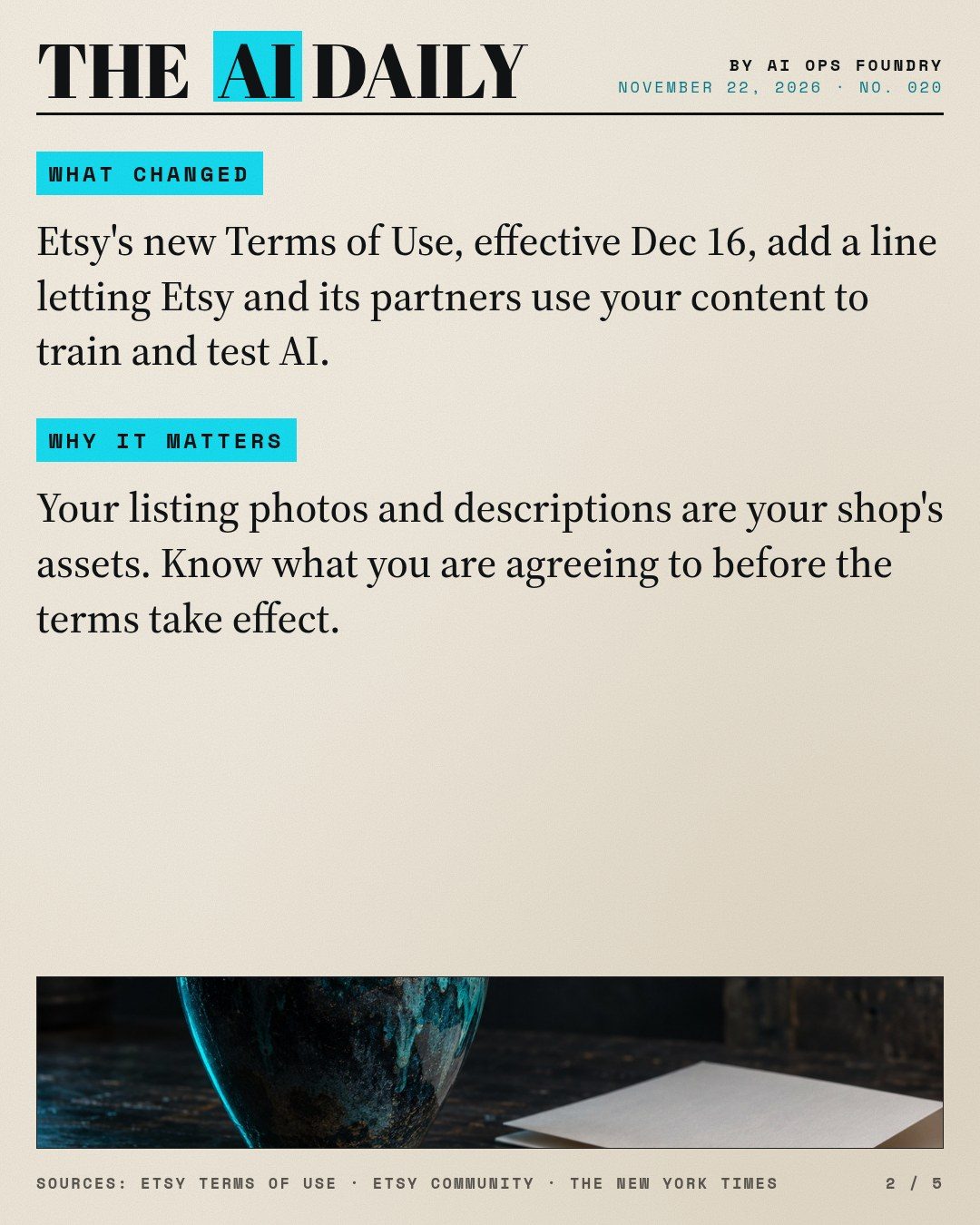
Etsy's updated Terms of Use take effect on December 16, 2026. In section 5.C, which covers the license sellers grant Etsy for their content, the new version adds one sentence: "This also includes the right for us and our third party partners and vendors to use Your Content to develop, train, test and improve artificial intelligence and machine learning technologies, including to improve the Services and/or help keep them safe, subject to any applicable opt-out rights described in our Privacy Policy." (Etsy Terms of Use)
Sellers pushed back, and some closed their shops. In a statement to The New York Times on November 20, Etsy said it would revise the policy after hearing their complaints and share the revised terms with sellers soon. (The New York Times) As of today, the revised wording has not been published, and the Dec 16 date shown on the terms page has not changed. (Etsy Terms of Use)
What changed
- A new AI sentence in section 5.C. Etsy and its "third party partners and vendors" may use your content to develop, train, test and improve AI and machine learning technologies. (Etsy Terms of Use)
- Effective December 16, 2026. That is the date on the current terms page. (Etsy Terms of Use)
- Opt-out points to the Privacy Policy. The sentence is "subject to any applicable opt-out rights described in our Privacy Policy." (Etsy Terms of Use)
- A revision is promised. Etsy told The New York Times it will revise the terms and share them with sellers soon. (The New York Times)
What Etsy says it does with seller content
In a community post, Etsy said your creative content "has always belonged to you" and that "we do not use your content to train AI models designed to copy your original work or replace your creativity." It listed current uses: models that identify potentially fraudulent accounts and listings, AI that understands the marketplace's inventory for search and recommendations, and AI-powered seller tools such as listing optimization and stats summaries. It also said its terms prohibit scraping Etsy or using its content to train AI models without permission. (Etsy Community)
Why it matters
For a small shop, listing photos, product descriptions and reviews are business assets you spent years building. Terms like these decide who else can use them, and for what. You don't need to panic or close your shop, but you should know what the current wording says, what Etsy has promised, and what changes when the revised version arrives.
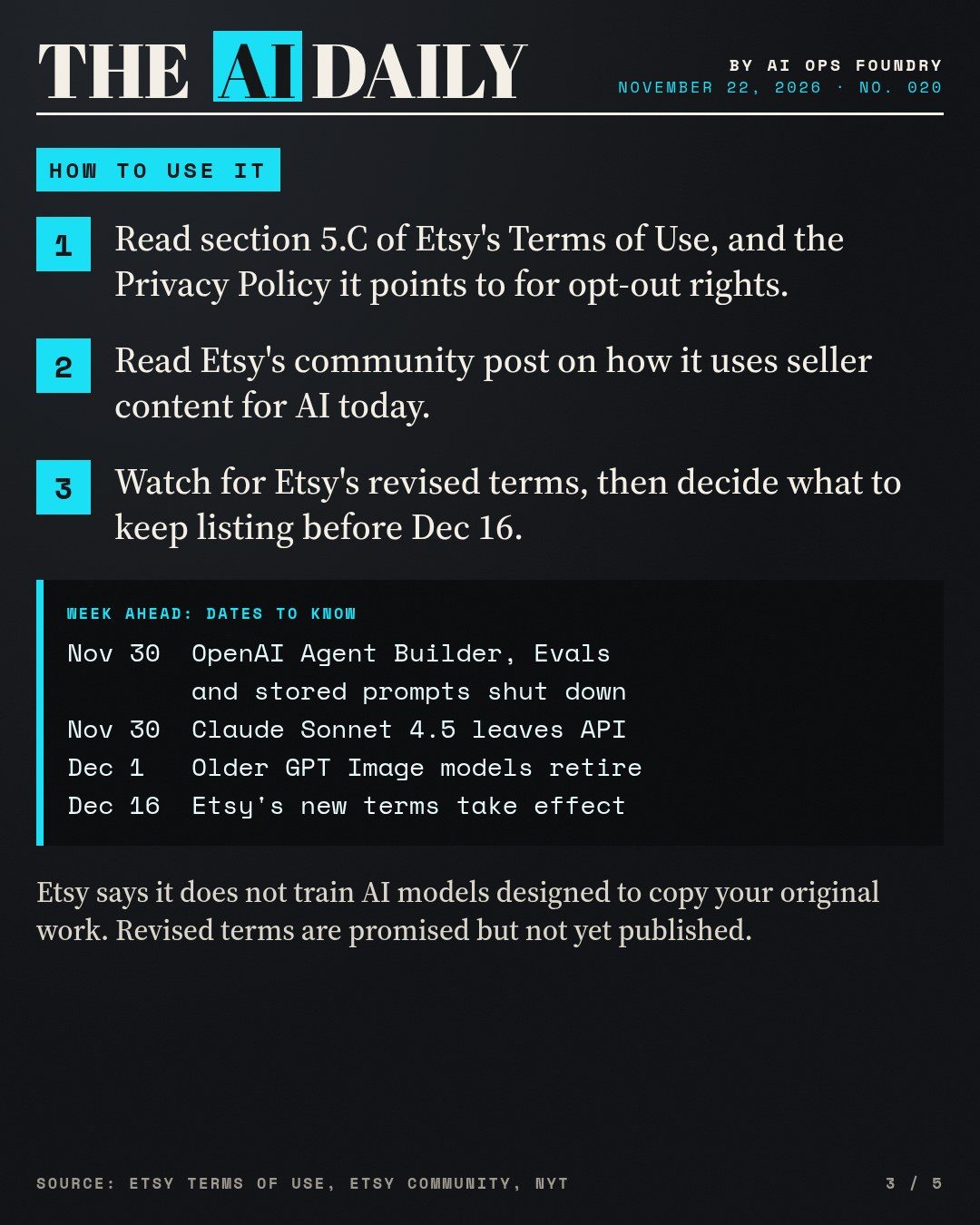
How to use it: a 20-minute terms check this week
- Read section 5.C. Open Etsy's Terms of Use and find section 5.C, the part about your content. Read the AI sentence in full. (Etsy Terms of Use)
- Find the opt-out rights. The sentence points to Etsy's Privacy Policy for any opt-out rights. Read that section and note what applies where you live.
- Read Etsy's explanation. Etsy's community post explains how it uses seller content today. (Etsy Community)
- Watch for the revised terms. Check your Etsy email and the community announcements this week. When the new wording arrives, compare it with today's sentence.
- Decide before Dec 16. If you are unsure, talk to a lawyer before then about what you list and how.
Also this week
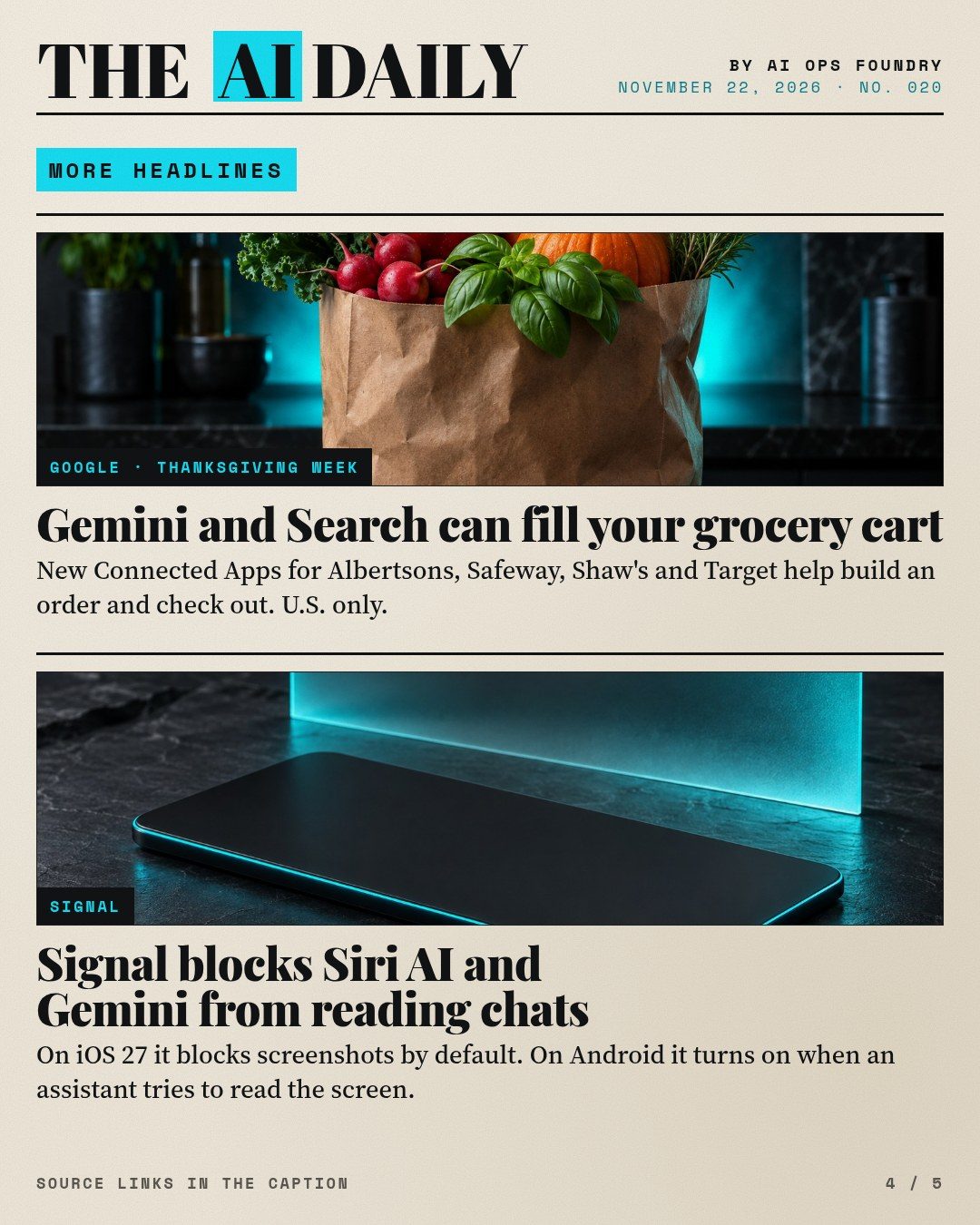
Gemini and Search can fill your grocery cart
On November 20, Google began rolling out new Connected Apps in the U.S. through Search and the Gemini app for grocery runs, including Albertsons, Safeway, Shaw's and Target. Google says they can help you build your order and check out, and pitches them for Thanksgiving groceries and holiday parties. Experian is rolling out to Search, H&R Block can estimate taxes from Search, and Angi and Thumbtack are coming in the coming weeks. (Google) In Search, Connected Apps work in AI Mode: enter a request, and if the app isn't connected yet, you get the option to connect it. You can disconnect apps from your Google Account at any time. (Google Search Help)
What to do: for Thanksgiving, try one small order in AI Mode, such as "@Target add the ingredients for a pumpkin pie to my cart for pickup", and check every item and price before you check out.
Signal blocks Siri AI and Gemini from reading your chats
On November 20, Signal said it is restricting AI agents built into phone operating systems from capturing Signal data. It now blocks screenshots in the app on iOS 27, and turns on Screen security on Android when it detects an AI assistant trying to read the screen. You can turn the protection off, but Signal warns that doing so may expose your and your contacts' messages to these agents. Signal says the fix is incomplete and that it cannot offer this protection on macOS. (Signal blog) On iPhone, Block Siri AI is on by default (Signal 8.37 or later on iOS 27); on Android it needs Signal 8.35.1 or later. (Signal Support)
What to do: if your team uses Signal for client conversations, update the app and check Settings, Privacy. Expect screenshots to be blocked in Signal on iPhone.
Dates to know
- Nov 30: OpenAI shuts down Agent Builder, the Evals dashboard and API, and /v1/prompts with reusable prompt objects. (OpenAI API deprecations)
- Nov 30: Claude Sonnet 4.5 (claude-sonnet-4-5-20250929) retires from the Claude API; Anthropic recommends claude-sonnet-5-5. (Claude model deprecations)
- Dec 1: gpt-image-1-mini, gpt-image-1.5 and chatgpt-image-latest leave the OpenAI API. (OpenAI API deprecations)
- Dec 16: Etsy's new Terms of Use take effect, unless Etsy changes them. (Etsy Terms of Use)
What to do: if a tool you pay for runs on any of these, ask the vendor this week whether they have already switched.
Recommended tools for today
- Etsy Terms of Use, section 5.C: the exact wording of what sellers grant.
- Connected Apps in AI Mode: a grocery cart from a plain request, with you checking out.
- Signal Screen security: keeps on-screen AI assistants out of your chats on phones.
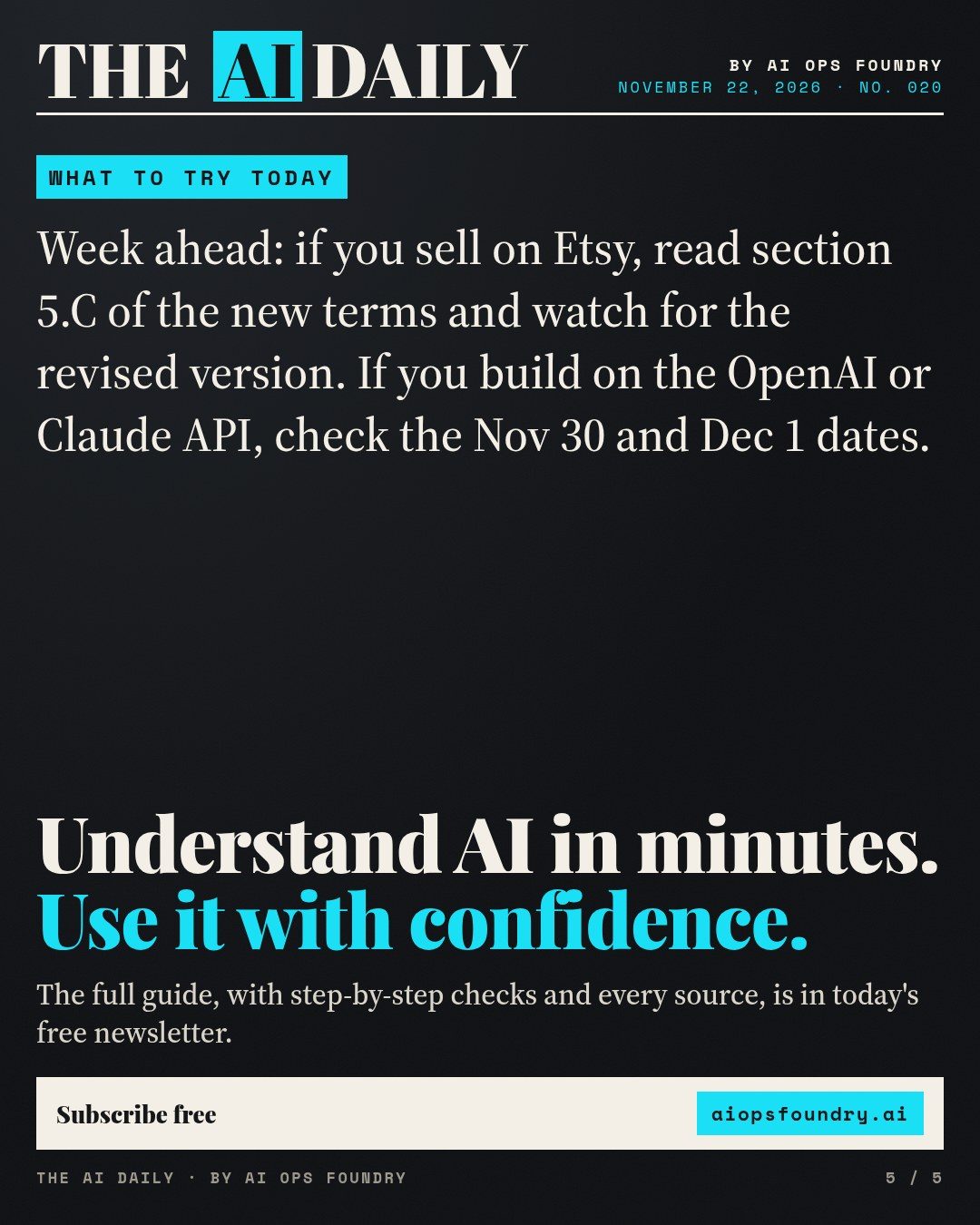
What to try today
Week ahead: if you sell on Etsy, read section 5.C of the new terms and watch for the revised version. If you build on the OpenAI or Claude API, check the Nov 30 and Dec 1 dates.
The edition in slides
The same story as the Instagram and Facebook carousel. Swipe or scroll; select a slide to open it full size.

Sources
Every fact is from the official sources listed above, checked on the day of publication. See how we label AI news.